Tesla Q3 Earnings: Margins Rebound But Profit Slides
The automaker beat revenue expectations and improved gross margins, yet operating income fell sharply as spending on AI and new vehicles surged.
By Mykola Bondarenko ·
Tesla’s third-quarter financial report reveals a company in transition, with recovering margins masking a significant decline in bottom-line profitability.
The electric vehicle maker reported $28.05 billion in revenue, essentially matching the $28.06 billion projected by Wall Street. Non-GAAP earnings per share came in at $0.48, exceeding the consensus estimate of $0.45, though this figure remains down four percent from the same period last year. While the top-line numbers held steady, the company’s GAAP net income dropped 43 percent to $787 million, or $0.22 per share, signaling continued pressure on the bottom line despite the revenue stability.
The primary driver of the profit decline was a massive increase in operational spending. Operating income fell 56 percent year-over-year to $718 million, resulting in an operating margin of 2.6 percent. This dip is largely attributed to a 39 percent rise in operating expenses to $4.78 billion. Research and development costs surged 69 percent to $2.76 billion as Tesla invests heavily in its "Super Intelligence" initiative, the Optimus robot, and the Cybercab. Additionally, stock-based compensation reached $1.17 billion, up from $663 million a year ago, partly due to the 2025 CEO pay package.
Capital spending more than doubled to $4.73 billion, reflecting an aggressive expansion strategy. However, this heavy investment pace raises questions about the company's annual guidance. Tesla has guided for more than $25 billion in capital expenditure for 2026, but has only spent $13.01 billion through the first nine months. To meet that target, the company would need to spend roughly $12 billion in the fourth quarter alone, a figure that is more than double its highest quarterly spend to date. This discrepancy suggests the 2026 plan may be slipping into 2027, or that fourth-quarter spending will need to increase dramatically.
Automotive gross margin excluding regulatory credits improved to 18.1 percent, up from 16.3 percent in the second quarter and 15.4 percent a year ago. Tesla attributes this improvement to a better regional and product mix, along with increased revenue from Full Self-Driving subscriptions. However, energy segment revenue fell 16 percent to $2.88 billion, a drop the company partly blames on tariff-related customer refunds, even as storage deployments rose. Conversely, the services segment saw a 33 percent revenue increase to $4.61 billion, with gross profit hitting a record high driven by charging, insurance, and parts sales.
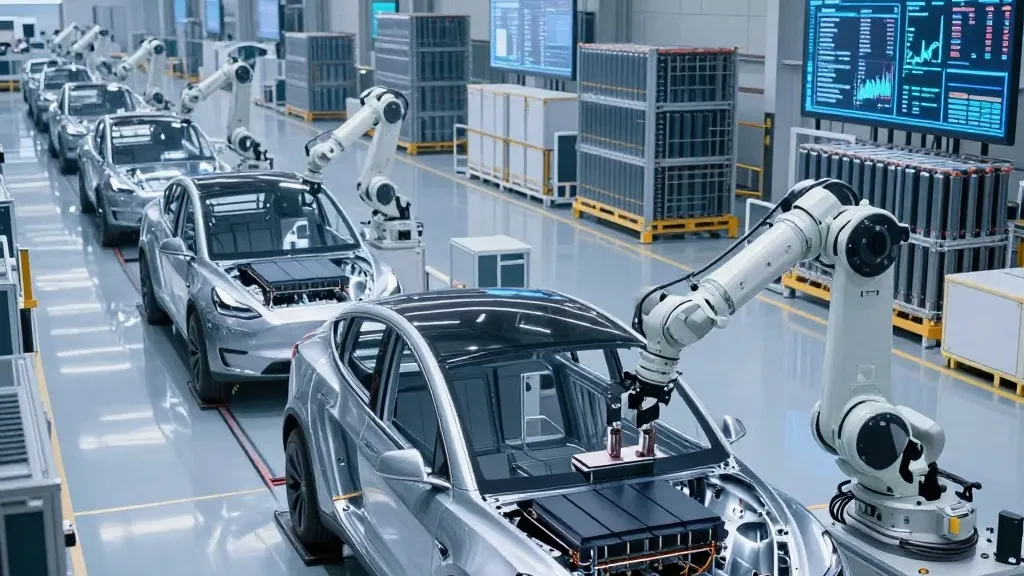
Management cited battery availability as the main limiting factor for vehicle volumes, noting that the company ended the quarter with its largest passenger vehicle backlog in four years. Despite this supply constraint, average selling prices continued to decline. On the autonomy front, active Full Self-Driving subscriptions reached 1.74 million, a 67 percent increase, while the Robotaxi service accumulated nearly two million unsupervised miles by the end of the quarter. The full shareholder deck and management discussion are available following the 5:30 p.m. ET earnings call.
The results paint a complex picture of a company trading immediate profits for long-term growth. While margins are improving and the services business is a bright spot, the steep rise in R&D and capital spending continues to erode net income. Investors will be watching closely to see if the heavy investment in AI and new hardware lines begins to show returns in the coming quarters, or if the profit slide persists into the fourth quarter.
Source: Electrek