Musk’s $76M Injection Threatens Republican Midterm Grip
A massive late-cycle cash infusion by Elon Musk targets the Texas Senate race, intensifying scrutiny on his political influence and corporate ties.
By Min-jun Kim ·
Elon Musk’s political war chest surged with a $76 million personal contribution in the final fortnight of October, aiming to secure Republican victories in the upcoming midterms. The infusion, disclosed in a pre-election report filed Thursday evening with the Federal Election Commission, represents the most significant late-stage financial push by the billionaire this cycle. America PAC, the vehicle for his personal political spending, deployed nearly $43 million during this period while retaining close to $47 million in cash reserves for the campaign’s closing days.
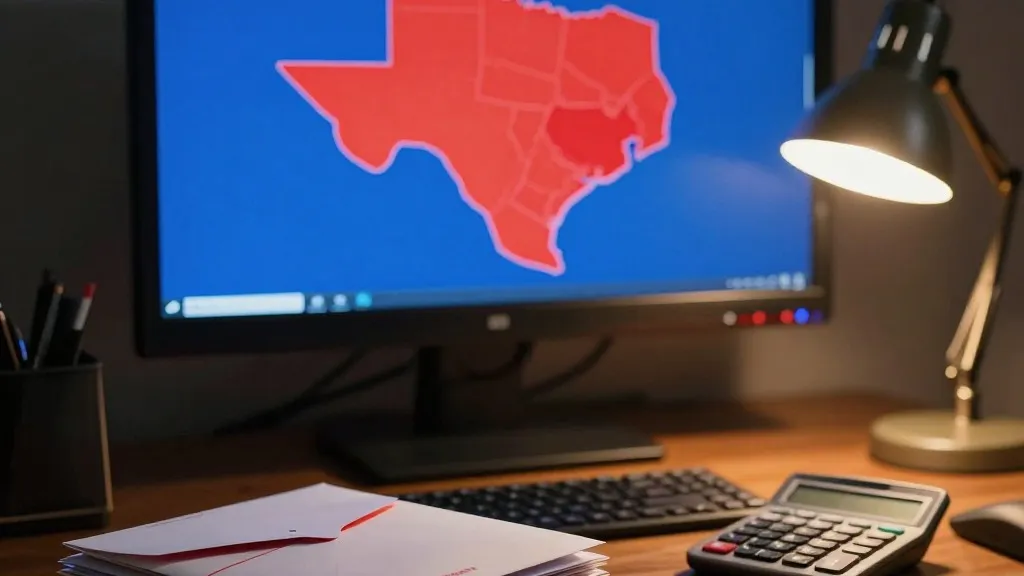
The Texas Senate contest absorbed the largest share of this new capital, drawing $15.2 million in the two-week window. This figure is double the total the PAC allocated to that state throughout the summer. The spending was heavily skewed toward attacking Democratic nominee James Talarico, with $12.4 million directed at negative ads, while $2.8 million was spent promoting Republican challenger Ken Paxton. Subsequent daily filings indicate an additional $9.1 million was spent against Talarico after the initial report, bringing his total opposition spending to nearly $28 million. This amount constitutes approximately 40 percent of the PAC’s total expenditures on supporting or opposing candidates this cycle.
A notable shift in strategy accompanied the financial surge, as the PAC moved aggressively toward digital platforms. America PAC spent $11.4 million on online advertisements during the same two-week period, a sum nearly equal to its combined spending on traditional mail and text messaging. This pivot highlights the increasing dominance of digital channels in modern campaign finance. The group did not respond to requests for comment regarding the strategy shift or the scale of the final push.
Musk’s personal involvement in the Texas race extended beyond financial backing to include a direct online campaign. On Wednesday, he posted on the social platform X, stating that “there is something deeply wrong with Talarico.” He further described the Democrat as “a creep” and asserted, without providing supporting evidence, that Talarico “would vote to take away your kids and transition them.” Earlier in the month, Musk amplified a claim that Talarico had received treatment at a mental health facility, a narrative the Democrat disputed. Talarico responded on the same day, noting that “there is something deeply wrong with a political system that allows one trillionaire to buy his own personal US Senator.”
Despite the substantial spending, the Texas race remains statistically undecided. An Emerson College poll of 1,000 likely voters, conducted from October 17 to 19, found Talarico leading by two points at 48 percent, compared to Paxton’s 46 percent. The result falls within the survey’s three-point margin of error, indicating a tight contest that could be swayed by final-week efforts. The proximity of the candidates suggests that the $76 million injection may be pivotal in determining the outcome.
The implications of the midterms extend beyond the specific races, posing significant risks to Musk if Democrats gain control of the House of Representatives. Lawmakers poised to lead committee investigations have indicated they will examine Musk’s role in the Department of Government Efficiency, known as DOGE, as well as his companies’ federal contracts. Representative Zoe Lofgren, a Democrat from California, described the number of potential conflicts of interest as “astounding.” A unified Democratic Congress would present even greater challenges for Musk, potentially leading to deeper legislative scrutiny of his business empire.
Silicon Valley Democrats have also identified specific corporate targets for their legislative agenda. On Friday, Representatives Sam Liccardo, Jimmy Panetta, and Ro Khanna sent a letter to the White House demanding an investigation into restrictions on SpaceX’s Starshield satellite service in Ukraine. The lawmakers vowed that the next Congress “will closely scrutinize federal funding awarded to Mr. Musk’s businesses.” This coordinated effort underscores the growing bipartisan interest in regulating the intersection of major technology firms and government policy.
Altogether, Musk has contributed more than $445 million to Republican political groups this election cycle, according to an analysis of Federal Election Commission filings. This total makes him the largest known individual donor in the midterms. More than $165 million of that sum was directed to America PAC since July, reflecting a sustained and escalating financial commitment to the Republican cause. As the election approaches, the scale of his investment underscores the central tension between private wealth and public political power.
Source: Wired